

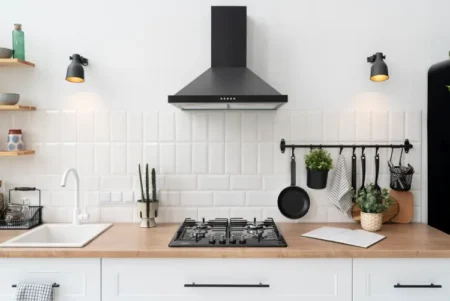
Most people choose a kitchen hood based on how it looks. Stainless steel, modern shape, maybe lighting. But the real purpose of a hood is not design. It removes smoke, grease, heat, and odors from cooking, protecting both air quality and surfaces in your home. If you choose the wrong one, the kitchen still fills with steam and smells, even if the hood looks expensive.
Why Power (CFM) Is The Most Important Parameter
The main thing that determines how well a hood works is airflow power, measured in CFM. This shows how much air it can move in one minute. For a standard home kitchen, you usually need around 250–300 CFM for a regular stove, and more if you cook often or use gas.
If power is too low, the hood simply won’t capture smoke and grease. It will run, make noise, but not actually solve the problem. This is one of the most common mistakes people make when choosing.
Ducted Vs Ductless Which One Actually Works Better
There are two main types of hoods. Ducted systems push air outside through ventilation. Ductless systems filter air and return it back into the kitchen.
Ducted hoods are always more effective. They remove heat, moisture, and pollutants completely. Ductless options are easier to install, but they only reduce odor and grease, not humidity or heat. If you cook frequently, ducted is almost always the better choice.
Types Of Range Hoods And Where They Fit
The type of hood depends on your kitchen layout. Under-cabinet hoods are compact and fit under existing cabinets. They save space and are easy to install, but usually have lower power and can be noisier.
Wall-mounted hoods are larger and more powerful. They work well if your stove is against a wall and you want stronger ventilation. Island hoods hang from the ceiling and require even more power because there are no walls to contain airflow. Downdraft systems pull air downward, but they are less effective for heavy cooking.
Why Size And Position Matter More Than You Think
A hood should not just match the stove size. It should slightly exceed it. Ideally, it extends a few inches beyond the cooktop to capture rising air effectively.
Placement also matters. Too high, and it loses efficiency. Too low, and it becomes uncomfortable to use. The correct height allows it to capture smoke before it spreads.
Noise Levels And Why They Can Ruin The Experience
Many people ignore noise when choosing a hood. But this becomes obvious immediately after installation. Some hoods are loud enough to make conversation difficult.
Noise depends on fan power and design. More powerful systems are often louder, but better models balance airflow and sound. If you cook often, this detail becomes important for daily comfort.
What Filters Actually Do And Why They Matter
Every hood has filters that capture grease and particles. Over time, these filters get dirty and reduce efficiency. Some are washable metal filters, others use charcoal for odor control in ductless systems.
Regular cleaning is essential. If filters are not maintained, airflow decreases and the hood stops working properly. This also increases fire risk because grease buildup becomes flammable.
What A Properly Chosen Hood Feels Like
When the hood is chosen correctly, you barely notice it working. Air stays clean, smells disappear quickly, and surfaces don’t get covered in grease. The kitchen feels lighter and more comfortable.
A bad hood does the opposite. It runs, makes noise, but doesn’t solve anything. The difference is not in design. It is in understanding how ventilation actually works and choosing based on function, not just appearance.
Picture Credit: Magnific